Electric Vehicle Tracking
Limited driving range
Range anxiety is a daily concern when drivers can’t see how much charge is left or whether it will last the whole shift.Charging planning and downtime
Charging takes much longer than refueling, so poorly planned sessions leave vehicles off the road when they are needed.Lack of real-time battery visibility
Without live charge data, fleet managers can’t tell which vehicles are ready for the next job.Limited visibility into energy use
Driving style, load, and route all affect consumption, but without data, it’s hard to see where energy is being wasted.Security of light e-mobility fleets
Shared e-bikes and e-scooters are parked in public spaces, which makes them easy targets for theft and misuse.
Key features
Real-Time EV Fleet Monitoring
Track live location and plan charging around real vehicle use with a professional electric vehicle tracking system.
Driver Identification & Monitoring
Identify the driver of each electric vehicle and monitor driving behavior with Eco-Drive analysis.
Energy & Battery Management
Monitor battery charge level and energy consumption in real time with an EV GPS tracker, where the vehicle provides this data.
Accident Management
Detect impacts automatically, react fast to any accident and analyze the data gathered.
Why track electric vehicles?
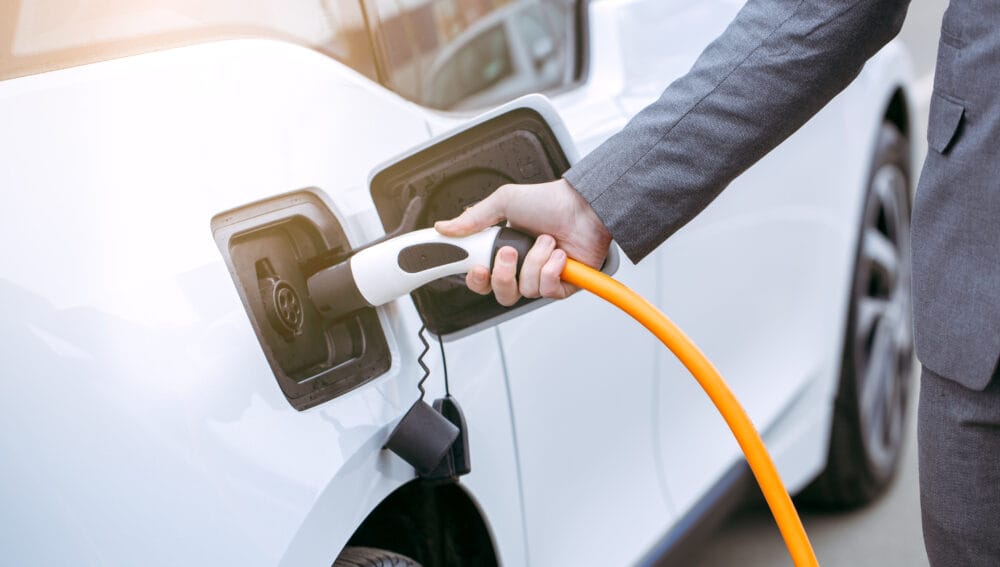
Electric fleets bring lower running costs, but they also bring new challenges. Range depends on driving style, load, weather and route, and charging takes far longer than filling a tank. Without clear data, a vehicle can run low on charge in the middle of a shift. Electric vehicle tracking gives fleet managers visibility into location, charge level and energy use, so they can see which vehicles are ready for the next job, plan charging around real demand and keep every vehicle on the road until the work is done.

How Ruptela’s EV tracking system works
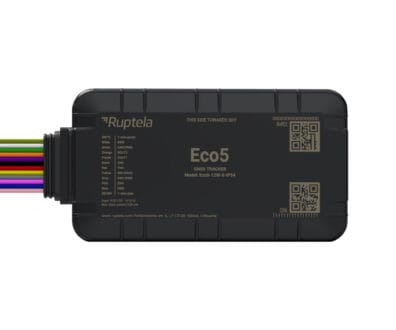
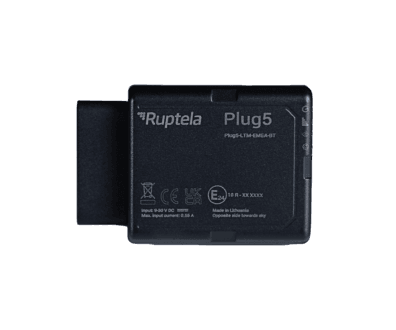
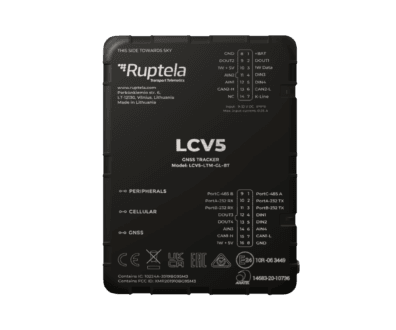
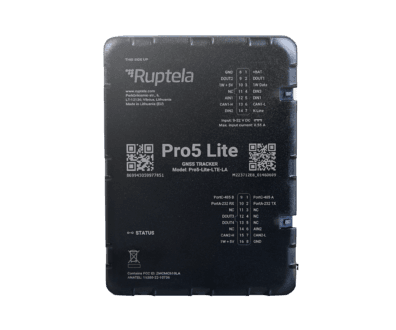
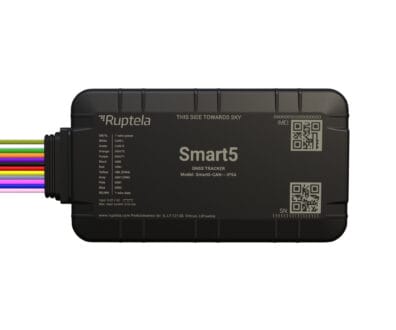
Each Ruptela electric vehicle GPS tracker combines GNSS positioning with vehicle data. In electric cars, vans, trucks, and buses, the device connects to the CAN bus. Depending on the vehicle model, it reads data such as battery charge level, charging state, and energy consumption. It sends this data, along with location, over mobile networks to the fleet platform at the intervals you set. For e-bikes, e-scooters, mopeds, and other light EVs, Eco5 Lite+ connects directly to high-voltage systems up to 97 V and comes in a waterproof IP68 housing built for shared and last-mile mobility fleets.
Benefits of electric vehicle tracking
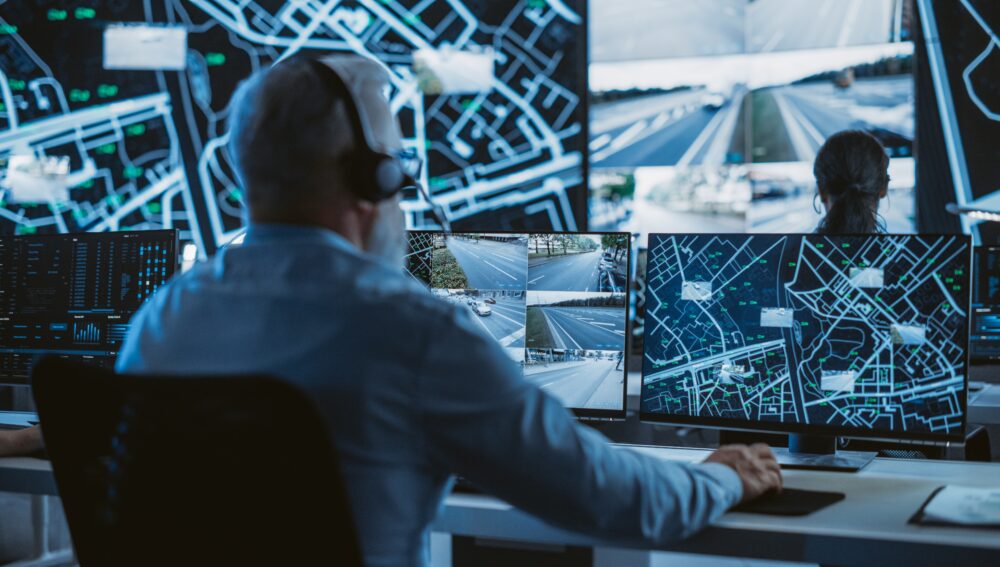
An electric car tracker turns everyday driving into data that improves fleet performance. Eco-Drive reports flag harsh acceleration, braking, and speeding, helping drivers adopt smoother habits that reduce energy use and ease strain on the battery. Charging data helps plan sessions around real vehicle use, including off-peak hours when electricity is cheaper. With clear visibility into charge levels and vehicle availability, managers can assign the right vehicle to each job, avoid unplanned stops and emergency charging, and keep more of the fleet in service throughout the working day.
Frequently asked questions
Can you track battery health?
Battery health data isn’t available with Ruptela devices. However, where the vehicle provides it over the CAN bus, you can monitor battery charge level and energy consumption to plan charging and keep the fleet running efficiently.
Does it work with all EVs?
Ruptela devices support a wide range of electric vehicles through a vehicle library that you can expand with CustomCAN. For e-bikes, e-scooters, and other light EVs, Eco5 Lite+ supports power systems from 9 to 97 V.
How accurate is EV tracking?
Devices use GNSS positioning with GPS, GLONASS, and Galileo for reliable location data. Accuracy can vary in conditions such as dense city centers or covered parking.
Can I monitor charging sessions?
Yes, when the vehicle provides charging data over the CAN bus, you can see when it is charging and how its charge level changes.