Tyre pressure monitoring system (TPMS)
Key values of TPMS
Ruptela’s TPMS is a fleet tire pressure monitoring system that gives fleets constant access to detailed tyre performance data and actionable insights that make operations safer, more efficient, and compliant with regulations. By delivering real-time information on tyre pressure and temperature for commercial trucks and trailers, TPMS helps transportation businesses protect vehicles and drivers, cut costs, and becomes an integral part of smart, telematics-enabled fleet management.
Real-time monitoring:
Pressure, temperature, and leaks under constant control.
Reliable data transmission:
Multi-network connectivity ensures stable data transmission from CAN bus and GPS to fleet management platform.
Comprehensive parameters:
From pressure and temperature to diagnostic trouble codes (DTC).
Safety and efficiency:
Fewer accidents, fuel savings, longer tire life.
EU compliance:
Ready for international safety standards.
Flexible Ruptela’s solutions:
Easy installation, scalability, integration, and remote support.
Tyre pressure in real time
Every second on the road matters, and the condition of your tires may be the difference between a safe journey and expensive downtime. As a reliable truck tire monitoring system, Ruptela’s technology keeps an eye on tire pressure, temperature, and leaks at all times, helping fleets identify and resolve issues before they become costly failures. TPMS sensors are installed inside each tire, constantly measuring air pressure and temperature. They send this data wirelessly to the Central Control Unit (CCU. The CCU passes the information through the vehicle’s CAN bus to a Ruptela tracking device, which transmits it via cellular networks to a fleet platform. Fleet managers get real-time alerts and full tire visibility, helping prevent accidents, reduce maintenance costs, and keep operations on track.
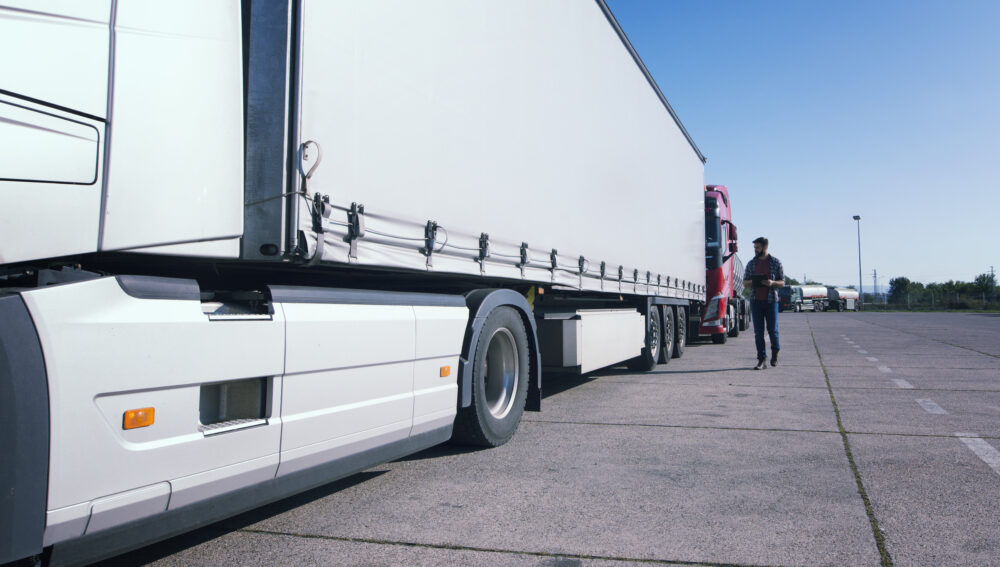
TPMS comprehensive data
The system delivers a complete set of parameters that give fleets a detailed overview of tire condition at any moment. In addition to tire pressure, temperature, and leak detection, it monitors threshold values, sensor status, electrical problems, and diagnostic codes. Fleet managers may monitor tire position, CTI sensor condition, leakage rate, pressure thresholds, DTC codes, and other signals using the ContiPressureCheck system. With all data consolidated, diagnostics are quicker, predictive maintenance is simpler, and commercial trucks stay safe, efficient, and road-ready. Accurate tire pressure insights allow for early risk identification, decreased downtime, and more efficient tire replacement cycle planning.

Use cases of tire pressure monitoring system
Ruptela’s TPMS is designed as a semi truck tire monitoring system for fleets that demand safety, efficiency, and compliance. Real-time monitoring of pressure and temperature helps detect issues early, saving fuel, extending tire life, and reducing accident risks. Detecting slow leaks prevents premature tire replacement, while continuous data supports maintenance. The system also ensures compliance with EU Regulation 661/2009 and international safety standards, protecting both fleets and cargo. Proper tire inflation lowers rolling resistance, improving fuel economy across trucks, trailers, and buses. TPMS also provides verifiable proof of proper monitoring, essential for fleets transporting hazardous goods.
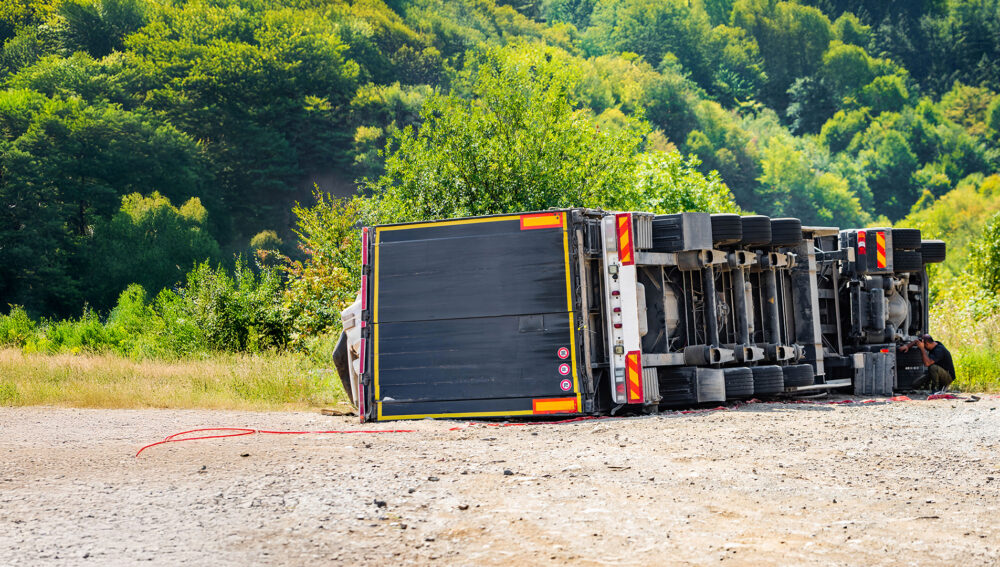
Easy & scalable Ruptela solutions
Ruptela’s tire pressure monitoring system combines simplicity with flexibility, making it easy to install and seamlessly connect with any fleet management software. The solution is fully scalable, so it works just as well for small fleets as for large international operations. Service providers can update firmware, configure parameters, and manage the system remotely without disruption. With its adaptable design, Ruptela’s TPMS helps fleets stay efficient, reliable, and in control of day-to-day operations, while ensuring long-term value from their TPMS investment.

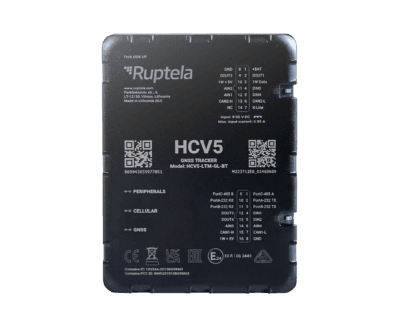
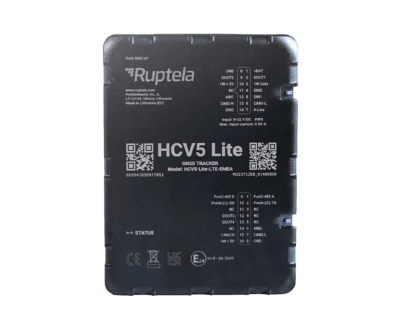
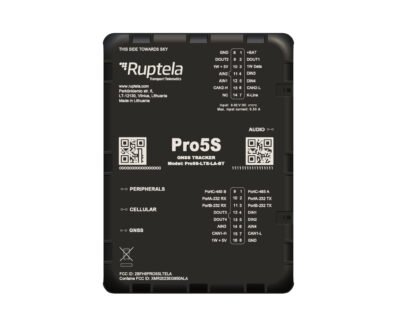
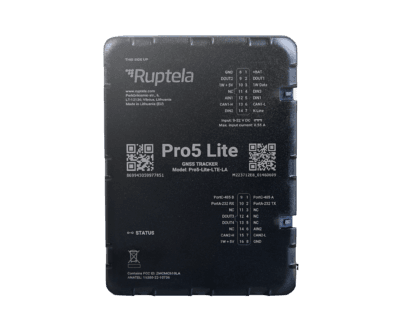
GPS Trackers for Tyre Pressure Monitoring
Frequently asked questions
By continuously measuring pressure inside each tire and comparing it against predefined thresholds.
Yes, TPMS can be installed on most commercial vehicles, trucks, buses, and trailers, though the setup may require additional receivers or configuration depending on axle count and vehicle type.
Tire sensors send pressure and temperature data via radio to the Central Control Unit (CCU), which passes it through the CAN bus to a Ruptela tracking device, and then the data is transmitted to the fleet management platform.
Yes, by keeping tires properly inflated, TPMS reduces rolling resistance for better fuel economy and helps prevent premature tire wear, extending overall tire lifespan.